


Informasjon
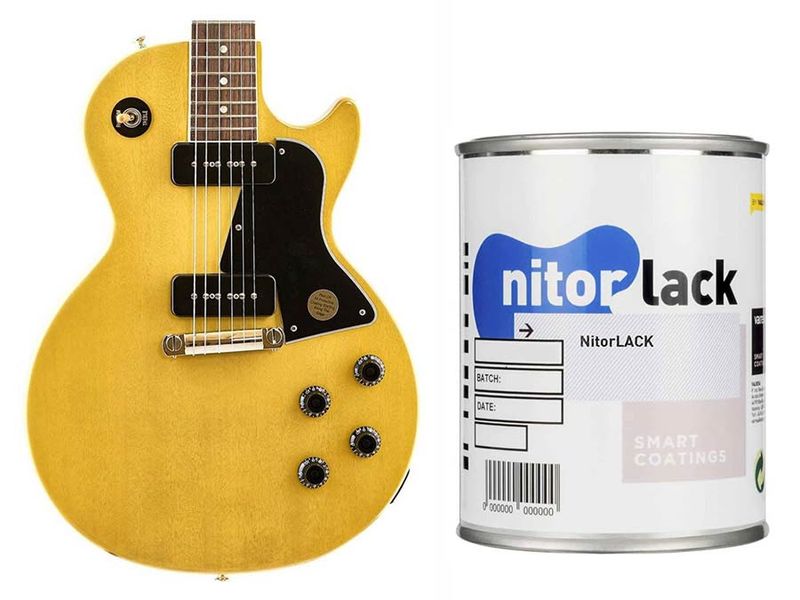
In 1954 Gibson launched the Les Paul Junior as an affordable student version of the Gold Top model. Initially available in sunburst, it was soon launched in a peculiar colour called TV Yellow. This finish has a slightly pale yellowish tone and is semi-translucent, so some of the wood grain shows through. In 1955, the TV Yellow also appeared on the then-new Les Paul Special model. In 1960 both models changed to the SG body shape and Gibson discontinued the TV Yellow altogether.
There is still a lot of speculation as to why Gibson chose this name for its finish. Some claim it was chosen specifically to look good on black and white televisions, or because ordinary yellow and white didnt look good on the (then new) early colour televisions. These theories, though oft-cited, seem far-fetched. It wouldnt make much sense for Gibson to develop a colour intended for professional musicians performing live on television and then use it for cheaper entry-level models. Therefore, it seems obvious at the time that Gibson would have preferred artists to play their more luxurious Gold Top and Custom models on television.
However, there is another theory that seems more credible. Firstly, the TVs of the early 1950s had wooden cabinets finished in the then fashionable colours, such as whitewashed mahogany. This paint was readily available, as it was in widespread use, an advantage for Gibson who planned to mass-produce a basic guitar. The name TV Yellow would be attractive and familiar to the general public in the USA.
Whatever the reason Gibson called it TV Yellow, this finish certainly looks great on these 1950s Gibson models.
Still, it's not easy to reproduce TV Yellow accurately as the final tone will depend on a number of factors. A lighter pale yellow colour on a darker mahogany body needs an undercoat, but the wood grain should remain slightly visible. The video tutorial shows how to get the most realistic effect using NitorLACK products.
There is still a lot of speculation as to why Gibson chose this name for its finish. Some claim it was chosen specifically to look good on black and white televisions, or because ordinary yellow and white didnt look good on the (then new) early colour televisions. These theories, though oft-cited, seem far-fetched. It wouldnt make much sense for Gibson to develop a colour intended for professional musicians performing live on television and then use it for cheaper entry-level models. Therefore, it seems obvious at the time that Gibson would have preferred artists to play their more luxurious Gold Top and Custom models on television.
However, there is another theory that seems more credible. Firstly, the TVs of the early 1950s had wooden cabinets finished in the then fashionable colours, such as whitewashed mahogany. This paint was readily available, as it was in widespread use, an advantage for Gibson who planned to mass-produce a basic guitar. The name TV Yellow would be attractive and familiar to the general public in the USA.
Whatever the reason Gibson called it TV Yellow, this finish certainly looks great on these 1950s Gibson models.
Still, it's not easy to reproduce TV Yellow accurately as the final tone will depend on a number of factors. A lighter pale yellow colour on a darker mahogany body needs an undercoat, but the wood grain should remain slightly visible. The video tutorial shows how to get the most realistic effect using NitorLACK products.
